
Hibachi party invitations should tell guests where to go, when to arrive, when dinner begins, how to RSVP, and how to share meal choices or dietary needs privately. Explain that dinner includes live cooking rather than an open-ended buffet. Confirm the chef’s schedule and your booking details before sending the invitation, then use a short follow-up message for parking, weather updates, and any changes. A clear invitation helps guests arrive ready for the meal and gives you useful answers before finalizing your event arrangements.
For a backyard birthday, graduation dinner, or family gathering in Texas, the invitation is also a practical planning tool. It connects your guest list with the meal and the event timeline without turning a friendly message into a long set of instructions.
What Should Hibachi Party Invitations Include?
Start with the details someone needs to decide whether they can attend. Put those details in the invitation itself rather than scattering them across several group-chat messages.
| Detail | What to communicate | Why it helps |
| Occasion and location | What you are celebrating and the confirmed event address | Guests understand the setting and travel plan |
| Arrival and dinner | Separate arrival time from the planned meal start | Guests can settle in before cooking begins |
| RSVP | A reply deadline and one contact or response method | You can track attendance consistently |
| Meal response | What choices you need and where to send them | Each confirmed guest is connected to a meal |
| Practical notes | Outdoor setting, access details, and anything guests should bring | Guests can prepare without guessing |
Keep the first message brief. If a detail does not affect the decision to attend or the response you need, save it for the reminder.
At Allstar Hibachi, our at-home hibachi experience combines live cooking with chef interaction and entertainment. An invitation should make that format clear, while leaving the exact performance and service arrangements to your confirmed event plan.
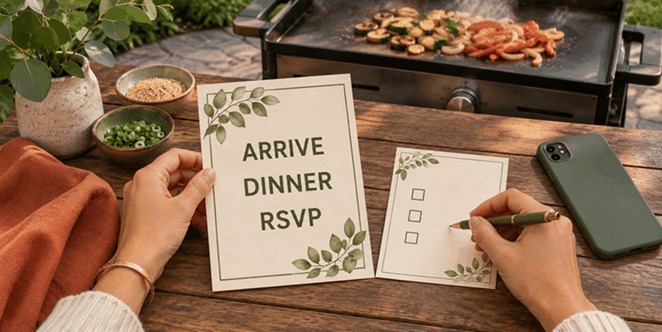
Illustrative reminder to distinguish arrival, dinner, and RSVP details.
How Should You Explain Arrival Time and Dinner Time?
Use two labels: “Please arrive” and “Dinner begins.” A single time beside the word “party” can mean different things to different people. Some guests will read it as the moment to walk through the door; others may assume it is an approximate start.
Choose the arrival window after confirming the cooking schedule with your provider. Allow time for greetings, seating, and any guest instructions that apply to your event. There is no universal arrival buffer that works for every property or group.
If you are planning a Houston backyard celebration, account for the actual route from parking to the dining area. A gate entrance or a longer walk around the house belongs in the reminder, especially if guests might otherwise ring the front doorbell.
Tell anyone expecting to arrive late to contact you directly. Ask the provider how late arrivals affect meal service before promising that a plate can be cooked at any time. The invitation should reflect the plan you have agreed on.
What RSVP Information Do You Actually Need?
Collect enough information to reconcile attendance and meals, then stop. A short response form or a consistent text format is usually easier to manage than several overlapping conversations.
Ask for the attending guests’ names, the number of adults and children, and any requested menu selections. If children’s meals depend on age categories, collect the information your provider needs rather than making assumptions from a family’s total headcount.
Allstar Hibachi’s menu and pricing describes the current meal choices and upgrades. Use that page to prepare your response options, then confirm the selections that apply to your reservation. Do not offer every menu item as if it is already included in your event.
Set your guest RSVP deadline early enough to review incomplete replies before the provider’s final deadline. Our booking FAQ says to follow the guest-count and menu deadline in your booking confirmation. Your invitation deadline is a host planning choice, not a new company policy.
Keep one master guest list. When someone changes a meal or adds a guest, update the same list and confirm the change with the provider if necessary. An unanswered invitation should remain unconfirmed until you receive a reply.
How Can You Ask About Food Allergies Respectfully?
Offer a private reply route in the invitation. For example: “Please message me directly about any food allergies or dietary requirements so we can discuss them before the event.”
That wording invites a conversation without asking guests to post health details in a group chat. It also avoids implying that every request can automatically be accommodated.
Food Allergy Research & Education recommends communicating food-allergy needs to the host in advance when someone else is providing the meal. Its food-allergy planning advice also encourages guests to ask what will be served.
Share relevant meal-preparation questions with the provider and let the guest take part in that discussion. An RSVP checkbox does not establish that a dish or shared cooking surface is suitable. Confirm the ingredients and preparation approach before describing an option as appropriate for a particular allergy.
Keep the general guest list separate from detailed dietary conversations. If an accommodation cannot be confirmed, discuss a separate meal plan with the guest and provider rather than writing “all dietary needs welcome” on the invitation.
Invitation Wording You Can Adapt
Use the following examples after confirming your reservation details. Replace every bracketed field, remove any line that does not apply, and include only food or extras you have arranged.
Backyard birthday dinner
Join us for [name]’s birthday and a private hibachi dinner!
We’ll gather at [address] on [date]. Please arrive at [arrival time]; live cooking and dinner are planned for [dinner time].
Please RSVP to [host/contact] by [RSVP date] with the names of everyone attending. I’ll send the meal choices with your reply. Message me privately about food allergies or dietary requirements so we can discuss them in advance.
We’re planning to dine [confirmed setting]. I’ll send parking and entrance details before the party.
Graduation or family celebration
Help us celebrate [occasion] with dinner and a live hibachi cooking experience at [address] on [date].
Please arrive at [arrival time] so we can be seated for dinner at [dinner time]. Reply by [RSVP date] with your party’s names and the requested meal selections.
Please contact [host] directly about dietary needs, access questions, or a late arrival. We’ll share a final event update before the celebration.
What Belongs in the Final Guest Reminder?
Send a concise reminder once the arrangements are settled. Repeat the address, arrival time, and dinner time, then add the few details that will make arrival easier.
Useful notes include the correct entrance, where parking is permitted, whether guests will walk across a lawn, and how to reach the host. Ask guests who need access assistance to contact you so you can discuss the route without assuming it works for everyone.
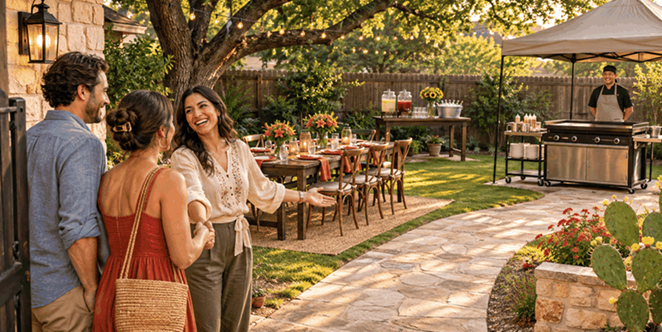
Illustrative arrival layout with a clear route to the dining area.
If dinner is outdoors, describe the confirmed setting and suggest that guests check the forecast when choosing clothing. Keep weather updates factual. Do not promise an indoor move, covered cooking location, or rain-or-shine service unless the provider and property have approved that arrangement.
Tell guests whether to bring drinks or other items only after deciding who is supplying them. Avoid “bring anything you like” if you need to coordinate shared dishes or dietary questions. You can instead ask guests to check with you before bringing additional food.
For any weather or schedule change, update the same invitation thread or contact channel. Ask for acknowledgment when a change materially affects travel or arrival, rather than assuming everyone has seen a new message.
Common Invitation Mistakes to Avoid
The most confusing invitation is one that sounds flexible while the meal has a planned start. Avoid “drop by whenever” unless the provider has confirmed a service format that supports it.
Do not describe tables, drinks, decorations, or a particular chef performance as included simply because they appear in a photo. Check your arrangements before turning those details into guest expectations.
If guests are sharing costs, explain the contribution and what it covers before they commit. Keep that arrangement separate from the caterer’s quote and payment terms; a host’s collection deadline does not change the provider’s booking requirements.
Finally, give guests one person to contact. A clear reply route is easier to act on than an invitation that directs them to the host, venue, and chef for the same question.
Frequently Asked Questions
Should I send invitations before booking the chef?
You can check interest or ask about possible dates first. Send a confirmed event invitation after the reservation status, location, and meal timing are settled. Label an early interest check clearly so guests do not mistake it for a secured event.
Do I need to include the full menu?
No. Include the choices guests actually need to make, or send a separate meal-selection message. Make any optional upgrade and who is paying for it clear before collecting orders.
What if a guest does not reply by the RSVP deadline?
Follow up directly. Explain when you need a firm answer to finalize the event. Ask the provider about any unresolved headcount before submitting your final list; do not assume an extra meal will be available.
Should I put the address on a public social post?
For a private gathering, share the event address directly with invited guests instead. A public celebration announcement can stay separate from the invitation that contains arrival and contact details.
Ready to Plan the Dinner Behind the Invitation?
Before sending your hibachi party invitations, settle the date, approximate guest count, location, and meal timing. Contact Allstar Hibachi to discuss the event arrangements and the details you need to confirm. Then give your guests a short invitation that makes the next step clear: reply, choose their meal, and arrive ready to celebrate.