
What is hibachi? In the United States, hibachi usually means a meal cooked on a large, flat griddle in front of guests, often with conversation and chef entertainment. The cooking method is more precisely called teppanyaki. Traditionally, a Japanese hibachi is a charcoal brazier used for warmth. Today, an at-home hibachi experience brings live cooking to a private gathering, with the menu, equipment, seating, and service details agreed on before the event.
If you searched for “what is hibichi,” you’re likely looking for hibachi—the standard spelling used for this dining experience.
What Is Hibachi, and How Is It Different From Teppanyaki?
The word hibachi can describe different things depending on the context. Understanding that difference helps you know what you’re booking.
| Term | Meaning | What to expect |
| Traditional Japanese hibachi | A charcoal brazier used for heating | A vessel holding charcoal, rather than a restaurant-style flat cooking surface |
| Teppanyaki | Cooking on a flat iron griddle | Ingredients cooked directly on a solid, heated surface |
| Hibachi dining in the U.S. | A common name for teppanyaki-style dining | A chef cooking in view of guests, sometimes with an interactive performance |
The Meguro History Museum describes the traditional hibachi as a charcoal heating device. Benihana explains the American terminology, where “hibachi” commonly refers to the flat-griddle dining experience.
For a party, the practical question is: “What cooking setup and service are included?” The word hibachi alone does not specify the fuel, menu, length of service, or entertainment.
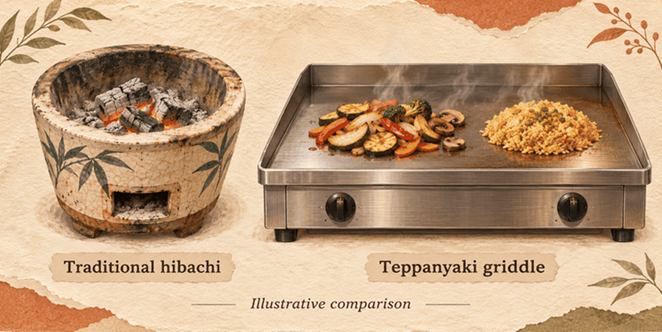
Illustrative comparison of a traditional heating brazier and a flat-top teppanyaki cooking surface.
What Food Is Served at a Hibachi Meal?
An American hibachi meal commonly combines a protein, vegetables, and rice. The exact ingredients and portions depend on the restaurant or caterer.
At Allstar Hibachi, our listed adult meal includes two protein selections, salad, fried rice, and hibachi vegetables. Our current menu and pricing explains the choices and available upgrades.
Before collecting everyone’s order, check whether a preferred protein costs extra and whether children receive a different meal. For a birthday dinner, a simple guest list with each person’s meal choice is more useful than a last-minute group text.
Sauces and cooking ingredients also deserve attention. Ask about their ingredients if a guest has an allergy or dietary restriction. A menu item’s name does not tell you everything used to prepare it.
What Makes Hibachi Different From a Regular Catered Dinner?
With hibachi dining, watching the cooking is part of the gathering. Guests can see ingredients being prepared and share the experience around the cooking area. A buffet, by comparison, usually centers on guests choosing from food that is already prepared for service.
That changes how you plan the evening. A scheduled cooking experience works best when guests know when to arrive and when dinner begins. If friends will arrive throughout the night, ask how meal service can accommodate that pattern before reserving.
For a family celebration, consider who wants a close view, who may prefer a quieter seat, and how children will move around the space. A good layout gives people a view while keeping walking routes clear.
You can meet the Allstar Hibachi chefs to learn about the personalities behind our cooking and entertainment. Discuss the style you want for your gathering rather than assuming every chef or event includes the same performance.
How Does At-Home Hibachi Work?
At-home hibachi brings a private hibachi chef and live cooking to your gathering. Allstar Hibachi offers at-home hibachi experiences that combine cooking with chef interaction and entertainment.
Planning usually involves three decisions:
1. Choose the setting and guest count. Share the event address, expected attendance, and proposed cooking area. Photos can make a site discussion more useful.
2. Confirm the meal and dining setup. Establish menu choices and ask what the quote includes. Identify who is providing tables, chairs, plates, utensils, and drinks.
3. Agree on the event timeline. Confirm arrival, setup, cooking, and cleanup arrangements, along with the deadline for final meal selections.
Keep a written summary of those details. “The chef brings the cooking equipment” and “the entire dining setup is included” describe different arrangements.
Our frequently asked questions list tables and chairs as optional add-ons and describe cleanup of our cooking area. Confirm any additional setup or cleanup you need rather than assuming it is included.
What Food Safety Questions Should You Ask Before Booking?
Live cooking gives guests a view of the meal preparation. That visibility is helpful, but food safety also depends on transport, storage, handling, and temperature checks.
Use these questions with any private caterer to understand the arrangements for your event.
How are ingredients kept at the right temperature?
Ask how perishable ingredients remain cold before cooking and how food is managed between servings.
For hosts handling party food or leftovers, USDA consumer guidance recommends keeping cold food at 40°F or below and hot food at 140°F or above. These guidelines are useful when planning refreshments, side dishes, and food storage after dinner. See the USDA explanation of the temperature danger zone.
How are raw and cooked foods separated?
Ask about utensils, plates, preparation surfaces, and handwashing arrangements.
The FDA advises against using plates or utensils that held raw meat, poultry, or seafood for cooked food unless they have been washed first. Keep serving dishes and guest snacks away from raw-food preparation, too. See the FDA’s outdoor food-handling guidance.
How is doneness checked?
Ask how the chef checks food temperatures. A hot griddle does not tell you the internal temperature of a piece of chicken.
USDA recommends cooking poultry to 165°F, measured with a food thermometer. Its safe internal temperature guidance provides recommendations for other meats as well.
Can the specific allergy be accommodated?
Share the exact allergy before booking, including concerns about sauces, butter, seasonings, and shared equipment. Ask what can be changed and what cross-contact risks remain.
Food Allergy Research & Education explains that cooking does not eliminate the risk of an allergic reaction from cross-contact. Simply removing an ingredient from a finished plate does not resolve that concern. See its guide to avoiding allergen cross-contact.
If safe accommodation cannot be confirmed, discuss a separately sourced meal with the guest and provider rather than assuming a menu substitution is sufficient.
What Should Texas Hosts Plan for Outdoors?
A backyard dinner needs a weather plan as well as a menu. Before committing to a location, discuss the proposed surface, equipment access, ventilation, clearances, and lighting with the provider. Keep children, pets, decorations, and walking routes away from the cooking zone.
Do not assume a garage, enclosed patio, tent, or indoor room is a suitable backup. The provider needs to approve the actual cooking location and equipment arrangement, and venue rules may also apply.
For a graduation party in Houston, keep drinks and the cake table outside the cooking route, and decide who will handle leftovers. Assigning those jobs before guests arrive helps keep the cooking area organized.
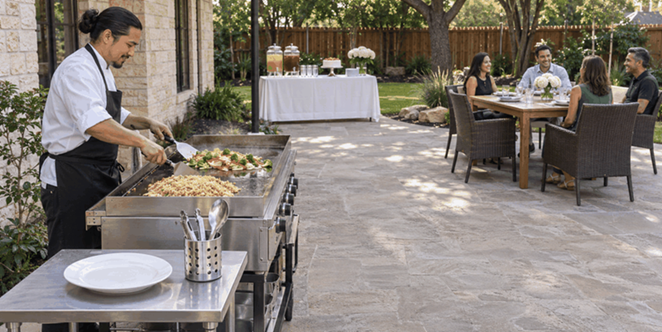
Illustrative party layout with the cooking zone separated from guest seating and refreshments.
In hot weather, be especially careful with food left out after service. FDA guidance advises discarding perishable food left out for more than two hours, or one hour when the outdoor temperature is above 90°F. Apply that to perishable guest-provided dishes and desserts as well as dinner. See the FDA’s outdoor serving recommendations.
Before paying a deposit, ask how rain, high wind, or unsafe conditions affect the event and what the reservation’s cancellation or rescheduling terms say.
Frequently Asked Questions About Hibachi
Is hibachi the same as teriyaki?
No. In American dining, hibachi describes a cooking and dining format. Teriyaki refers to a preparation associated with a sweet-savory glaze or sauce. A dish can involve both, so ask how the particular menu item is prepared. Kikkoman’s teriyaki guide explains the glazing technique.
Is hibachi always spicy?
No. The word hibachi does not specify a spice level. Ask about seasonings and sauces, and whether a milder preparation is available.
Is hibachi suitable for children?
It can be an option for a family gathering, but consider the child’s food needs, comfort with the entertainment, and ability to stay clear of the cooking area. Confirm children’s meal choices before booking.
How much does a private hibachi party cost?
The total depends on the menu, guest count, event minimum, location, and extras. Request an itemized quote covering applicable travel fees, upgrades, dining rentals, and taxes. A per-person food price alone does not establish your full event budget.
Ready to Plan Your Hibachi Party?
Start with your date, event address, approximate guest count, and any dietary requirements. Then contact Allstar Hibachi to discuss availability, the proposed setup, and the details you need to confirm before reserving.
Clear answers now make it easier to enjoy the gathering when everyone arrives.